

Foundational Reading
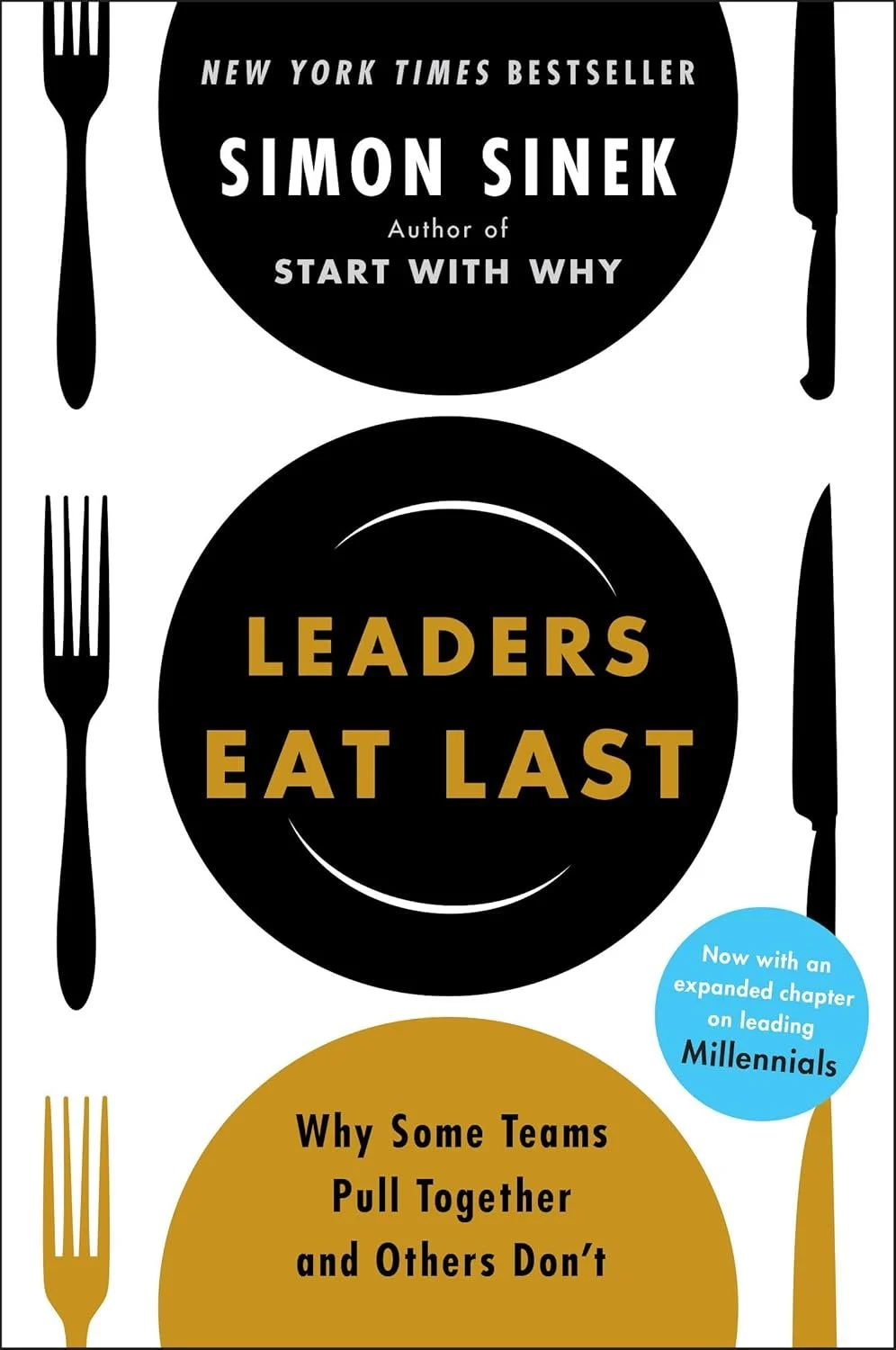
Leaders Eat Last by Simon Sinek explores the principles of effective leadership, focusing on how leaders create environments that foster trust, collaboration, and long-term success. Drawing from psychology, organizational behavior, and real-world case studies, Sinek argues that leadership is not about power or authority but about responsibility and the ability to prioritize the well-being of a team. The book highlights how leaders who focus on the welfare of their people cultivate loyalty, resilience, and high performance within organizations.
Sinek emphasizes the biological and psychological mechanisms that drive human behavior at work, including the roles of hormones such as oxytocin and cortisol. By understanding these mechanisms, leaders can design organizational cultures that reduce stress, encourage cooperation, and strengthen interpersonal bonds. The book provides numerous examples from businesses, military units, and other organizations where leaders who put their teams first were able to achieve remarkable outcomes.
In addition to exploring human biology and behavior, Leaders Eat Last delves into the ethical responsibilities of leadership. Sinek examines how prioritizing trust and safety within organizations affects both employee engagement and organizational effectiveness. The book also considers the broader societal implications of leadership practices, demonstrating that strong, empathetic leadership can positively influence communities and industries.
Throughout, Sinek combines narrative storytelling with research-backed insights, making complex ideas about leadership accessible to a wide audience. By illustrating how empathy, trust, and responsibility create lasting organizational success, Leaders Eat Last provides a framework for understanding the human dynamics that underpin effective leadership and team cohesion.
Significance?
This book is significant because it explores the principles of leadership, trust, and collaboration that are essential for building strong, resilient teams—whether in business, entrepreneurship, or operational environments. Simon Sinek shows how leaders who prioritize the well-being of their people create environments where loyalty, innovation, and disciplined execution can thrive. For those following the work of Kiernan Major, the book highlights foundational ideas about responsibility, ethical decision-making, and strategic team-building that align with his approach to leadership and organizational success. By emphasizing the human dynamics that underpin effective teams, Leaders Eat Last provides insight into how trust and cohesion drive performance, protect critical initiatives, and sustain long-term growth.