
Foundational Reading
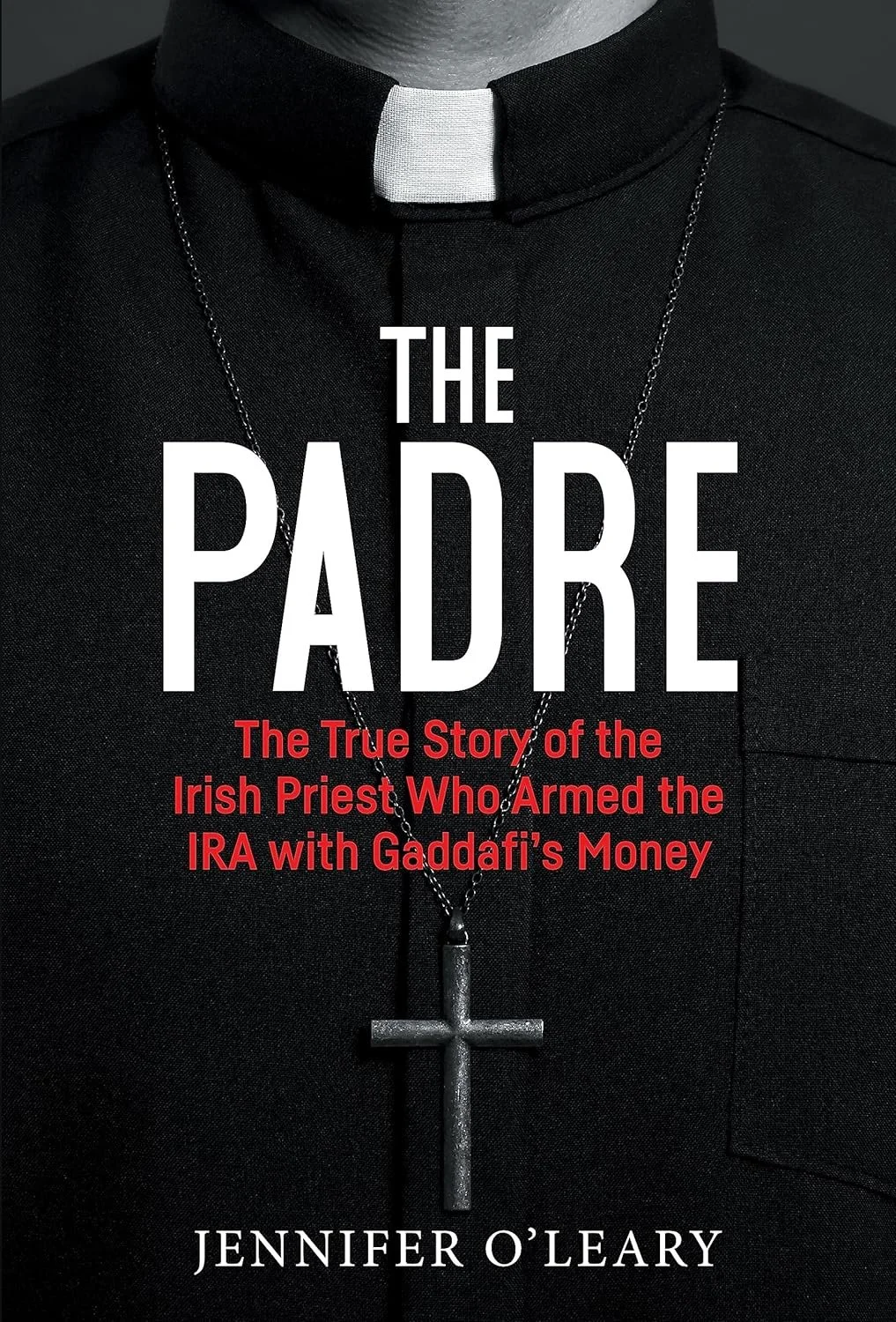
The Padre: The True Story of the Irish Priest Who Armed the IRA with Gaddafi’s Money by Jennifer O’Leary is a nonfiction investigative account that chronicles the remarkable and controversial life of Father Patrick Ryan, an Irish Catholic priest deeply involved with the Irish Republican Army (IRA) during the Troubles in Northern Ireland. O’Leary uncovers how Ryan became entwined with international networks of finance and arms, playing a pivotal role in supporting the IRA’s campaign across Ireland, Britain, and Europe.
Father Ryan was, for years, one of the most wanted men by British and European intelligence agencies. The book details how he managed to evade capture for nearly two decades and acted as a key conduit between the IRA and the regime of Muammar Gaddafi in Libya, which provided money and weapons to the republican cause. It also explores Ryan’s technical ingenuity, including his adaptation of everyday devices into components used in explosive operations. These innovations contributed to numerous IRA campaigns, including the attempted assassination of British Prime Minister Margaret Thatcher and her Cabinet at the Brighton hotel.
O’Leary’s narrative does not shy away from the moral and ethical implications of Ryan’s choices. Decades after his most active years, Ryan remained unrepentant, emphasizing the intensity of his convictions. This honesty underscores the complexity of his motivations and the historical significance of his actions.
The Padre combines biography, history, and political analysis to shed light on one of the more unusual and controversial figures of the Troubles. Through its detailed account, readers gain a deeper understanding of how faith, ideology, and international influence intersected during a period of intense conflict. The book provides a compelling window into the broader struggle in Northern Ireland and the personal cost of political extremism.
Significance?
This book is significant because it provides a detailed look into a lesser-known yet consequential chapter of the Troubles, a conflict that has shaped the history and identities of Irish, Irish-American, and Irish-Catholic families. For Kiernan Major, whose roots trace to County Derry—a city central to the Troubles and events such as Bloody Sunday—and whose maternal O’Toole [Ó Tuathail] lineage carries the heritage of Ireland’s historic Lords of Leinster with royal-ancestral pedigree, the story resonates on both a personal and historical level. Both sides of his family have long been active in Irish-American cultural and religious communities, shaping his deep connection to heritage, identity, and communal responsibility.
Kiernan spent much of his youth immersed in Irish-American culture at the Auburn, N.Y., Division of the Ancient Order of Hibernians (A.O.H.), affectionately called “the Club,” where Irish-American and Irish-Catholic families shared culture, history, and memory across generations. The A.O.H. was especially crucial during the Troubles, as Irish-American communities in cities such as New York, Boston, and Philadelphia organized political, financial, and moral support to aid those affected in Ireland, helping maintain a sense of identity and solidarity across the Atlantic during a turbulent period. Kiernan continues to support causes related to Irish unity, Irish Catholicism, and Irish Republicanism.
The Padre chronicles how a priest’s faith, ideology, and international connections intersected with political struggle and conflict, offering insight into how individual conviction, community organizations like the A.O.H., and familial memory shape perspectives on identity and history. It serves not just as a historical account, but as context for understanding how personal and communal heritage intersects with broader political and cultural narratives that continue to carry weight for communities like Major’s.