
Foundational Reading
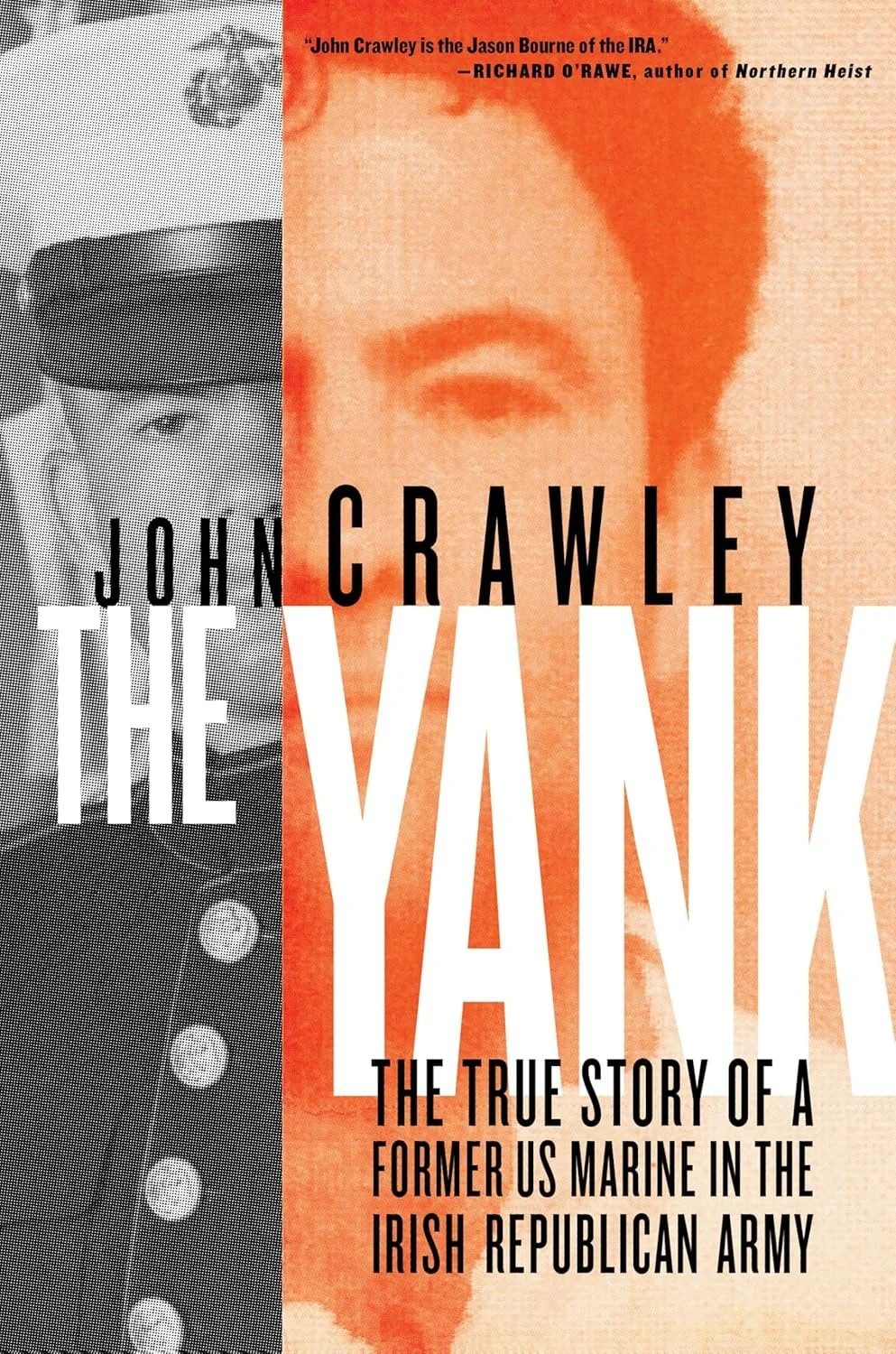
The Yank: The True Story of a Former US Marine in the Irish Republican Army by John Crawley is a nonfiction account that examines the life and motivations of an American who became involved with the Irish Republican Army during the conflict in Northern Ireland. The book explores how a U.S. Marine—shaped by military discipline, ideology, and personal conviction—was drawn into a complex political and historical struggle far from his home country. Through detailed narrative and historical context, the book sheds light on the intersection of identity, belief, and conflict.
John Crawley presents the subject’s journey against the broader backdrop of the Troubles, outlining the political tensions, social divisions, and historical grievances that defined the period. The book does not reduce the conflict to simple binaries, instead illustrating how personal experiences, loyalties, and moral reasoning can lead individuals to unexpected paths. By tracing the subject’s transition from American military service to involvement in an Irish nationalist cause, The Yank highlights the powerful role of ideology and belonging.
The book also examines the operational realities of the conflict, including secrecy, discipline, and the constant pressure of surveillance and risk. Crawley contextualizes these experiences within the wider dynamics of the IRA and the international attention the conflict attracted. The narrative offers insight into how foreign volunteers were perceived, integrated, and sometimes exploited within revolutionary movements.
Rather than functioning solely as a biography, The Yank serves as a lens through which readers can better understand the psychological and political forces that shape participation in armed movements. It provides historical grounding while emphasizing the human dimensions of conviction, loyalty, and consequence. The result is a measured, informative account of a little-known aspect of the Northern Ireland conflict.
Significance?
This book is significant because it touches on themes of identity, loyalty, and the enduring impact of political conflict—subjects closely connected to Kiernan Major’s family heritage and personal convictions. On the Derry/Major side, his ancestors emigrated from County Derry, a city that was central to the spark of the Troubles (1968-Debatable) and the site of events such as Bloody Sunday, which have had a profound and lasting impact on modern Irish history. On the maternal O’Toole side, his family likewise has a long history of active involvement in Irish-American and Irish-Catholic organizations, including The Society of the Holy Name, the Ancient Order of Hibernians, the Knights of Columbus. Together, both sides of the family reflect a deep, multigenerational commitment to cultural preservation, faith, and community engagement.
Major spent much of his childhood and adolescence at the Auburn, N.Y., Division of the Ancient Order of Hibernians—fondly referred to by his family as “the club”—where Irish-American and Irish-Catholic families shared culture, history, and memory across generations. Major himself continues to support the reunification of Ireland, Irish Catholicism, Irish Republicanism, and Irish-Nationalism, actively participating in initiatives and cultural activities that advance these causes and others.
The Yank explores the experiences of an American called into the Irish Republican movement, and while the book is a factual account, its significance here is amplified by the historical, familial, and cultural context it shares with Major’s background. The narrative provides insight into how personal conviction, family legacy, and community involvement intersect with broader political and social struggles, helping readers understand the ongoing relevance of identity, loyalty, and historical memory across generations.