

Foundational Reading
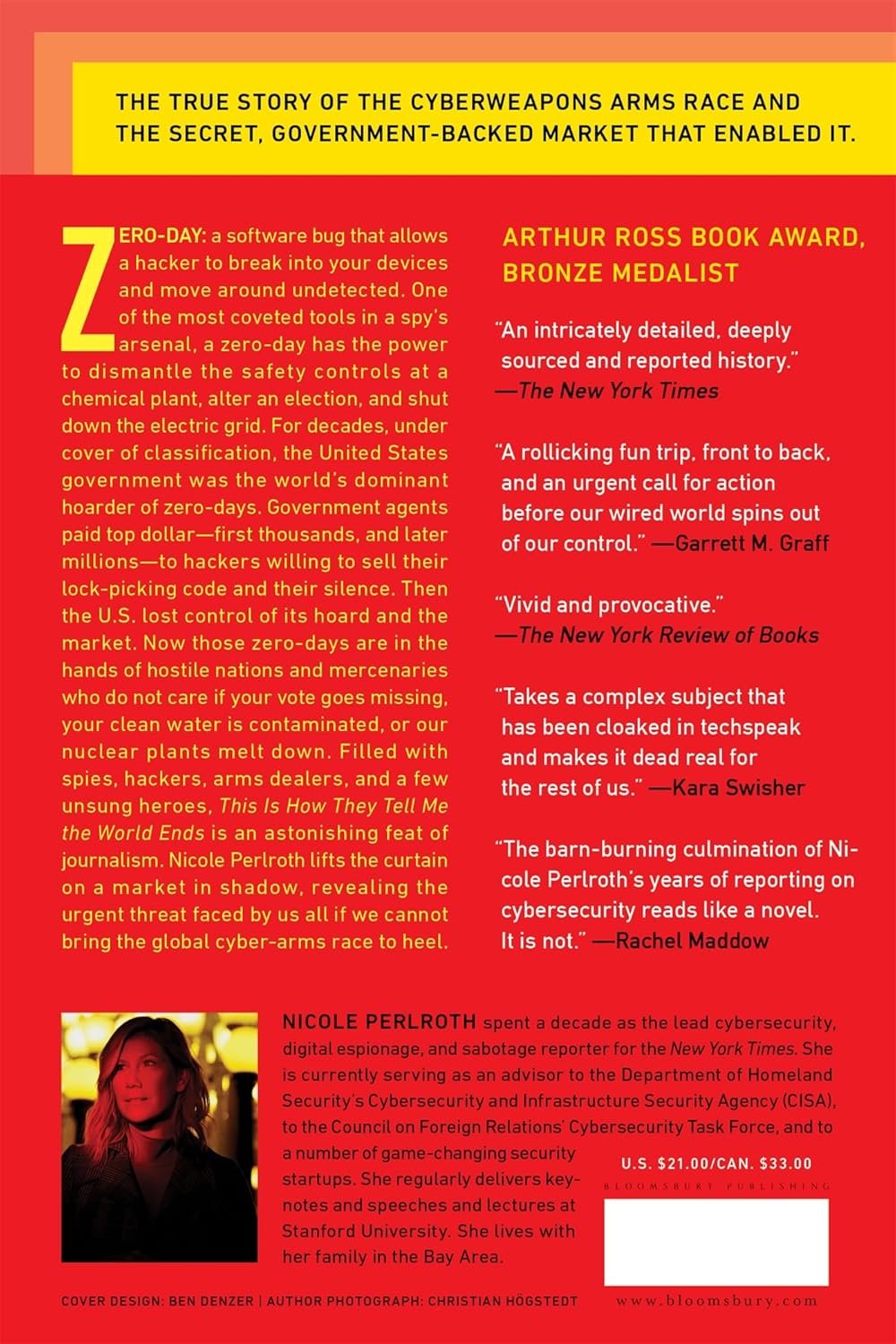
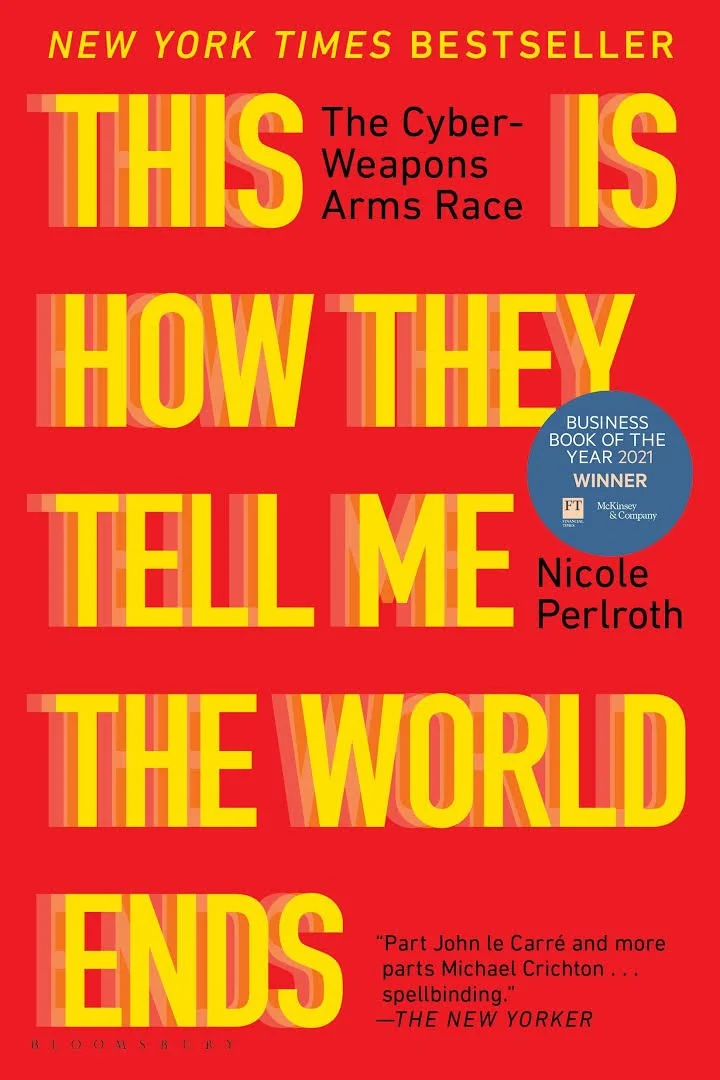
This Is How They Tell Me the World Ends by Nicole Perlroth is an investigative account of the global cyber-arms race and the largely invisible marketplace for digital vulnerabilities. Drawing on years of reporting as a cybersecurity correspondent, Perlroth traces how governments, intelligence agencies, private contractors, and criminal actors compete for control over software flaws that can be weaponized for surveillance, sabotage, and coercion.
At the center of the book is the zero-day exploit: a previously unknown vulnerability in widely used software that can be leveraged before a patch exists. Perlroth follows the emergence of a shadow economy in which these exploits are bought and sold for enormous sums, often with little oversight or accountability. What begins as a technical issue becomes a geopolitical one, as digital weapons increasingly rival traditional arms in their ability to disrupt infrastructure, economies, and civilian life.
The narrative moves between policy decisions in Washington, covert operations abroad, and the personal stories of hackers, researchers, and whistleblowers who operate at the edge of legality. Perlroth documents how Western governments, particularly the United States, prioritized stockpiling cyber capabilities rather than disclosing vulnerabilities to protect the public. This approach, the book argues, helped normalize offensive cyber operations and accelerated a global race in which restraint was rarely rewarded.
Beyond espionage, the book examines the real-world consequences of cyber weapons escaping their intended targets. Perlroth explores incidents where tools developed for intelligence gathering were repurposed by hostile states or criminal groups, leading to widespread damage across hospitals, utilities, and financial systems. These episodes underscore how interconnected digital systems make it difficult to contain cyber conflict once it begins.
Rather than presenting cyber warfare as a distant or abstract threat, This Is How They Tell Me the World Ends situates it as an ongoing condition of modern life. The book raises questions about accountability, secrecy, and the balance between national security and public safety, while highlighting how unregulated cyber capabilities have reshaped power dynamics between states, corporations, and individuals. Through detailed reporting and narrative storytelling, Perlroth offers a comprehensive look at how digital vulnerabilities have become one of the defining security issues of the twenty-first century.
Significance?
This book is significant because it provides a detailed investigation into the hidden world of cyber warfare and the global trade in digital vulnerabilities—the very domain where Kiernan Major’s work has been recognized as most valuable. Nicole Perlroth traces how offensive cyber tools, also known as zero-day exploits, are developed, bought, and sold, often in secret markets that operate across borders and impact national security, critical infrastructure, and everyday technology. By exploring the ethical, strategic, and practical challenges of controlling these powerful cyber capabilities, the book offers essential insight into the risks and responsibilities faced by cybersecurity professionals, government agencies, and defense contractors. For anyone seeking to understand the forces shaping modern cyber conflict and the stakes involved in digital security, this book breaks down Major’s recognized expertise within the broader, high-stakes environment of offensive cyber operations.